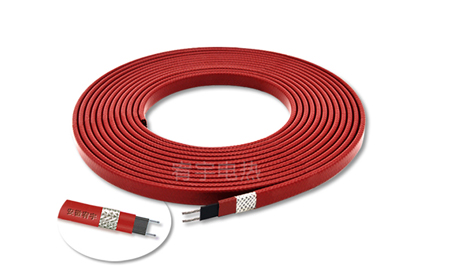
Application Scheme of
MI Armored Heating Cables
Asphalt is a commonly used raw material in road engineering and building material production. It is characterized by high viscosity at low temperatures and a strong tendency to solidify. If temperature control in asphalt storage tanks is improper, the fluidity of the material will decrease. This not only causes blockages at outlets and tank bottoms but also increases production costs due to repeated tank cleaning, affecting production continuity. Traditional steam coil tracing suffers from pain points such as pipeline corrosion, steam leakage, high energy consumption, and uneven temperature control. MI (Mineral Insulated) armored heating cables, with their robust metal armored structure, have become a reliable solution for maintaining constant temperatures in asphalt tanks.
MI armored heating cables feature a metal sheath as the outer layer, filled with mineral insulation material. The heating core and the stainless steel sheath form an integrated structure. Compared with conventional self-regulating heat tracing tapes, they offer a wider temperature tolerance range, meeting the high-temperature tracing requirements for maintaining asphalt fluidity. The seamless stainless steel sheath provides high mechanical strength and resistance to crushing and impact. This allows it to adapt to installation on tank surfaces and environments with oil stains and dust, reducing the risk of sheath damage or short circuits.
In asphalt tank projects, MI armored heating cables are generally laid spirally along the tank wall. The tank bottom, outlet valves, and outlet pipes are key areas for heat tracing. Since the tank bottom is where asphalt is most likely to deposit and solidify, cable density needs to be increased to ensure uniform temperature throughout the tank and prevent local temperature drops. After installation, the system is paired with a temperature control system. By setting a reasonable constant temperature range, the asphalt temperature is stabilized within the process requirements. This ensures fluidity while avoiding overheating, which could cause asphalt aging and deterioration.
Furthermore, MI armored heating cables possess excellent explosion-proof and corrosion-resistant properties, making them suitable for locations storing flammable and explosive materials like asphalt. The compact cable structure is waterproof and moisture-proof, maintaining stable insulation performance even when exposed to condensation or oil stains for long periods, thus ensuring a longer service life.
Regarding daily operation and maintenance, the system structure is simple. The focus is on regular calibration of temperature control instruments and insulation resistance testing of the cables. Compared to steam tracing, it eliminates the need for supporting facilities such as boiler rooms, transmission networks, and drainage devices, reducing pipeline maintenance workload and lowering long-term O&M costs.
As asphalt production and asphalt mixing plant projects demand higher automation in insulation, safe and stable
electric heat tracing solutions are gradually replacing traditional heat sources. Relying on its advantages of high-temperature resistance, high mechanical strength, and explosion-proof reliability, MI armored heating cables match the harsh working conditions of asphalt tanks perfectly, making them the preferred product for insulation and heat tracing in asphalt storage and transportation systems.