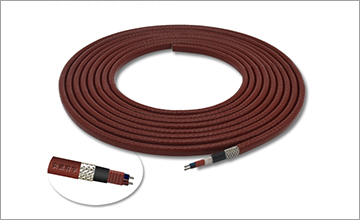
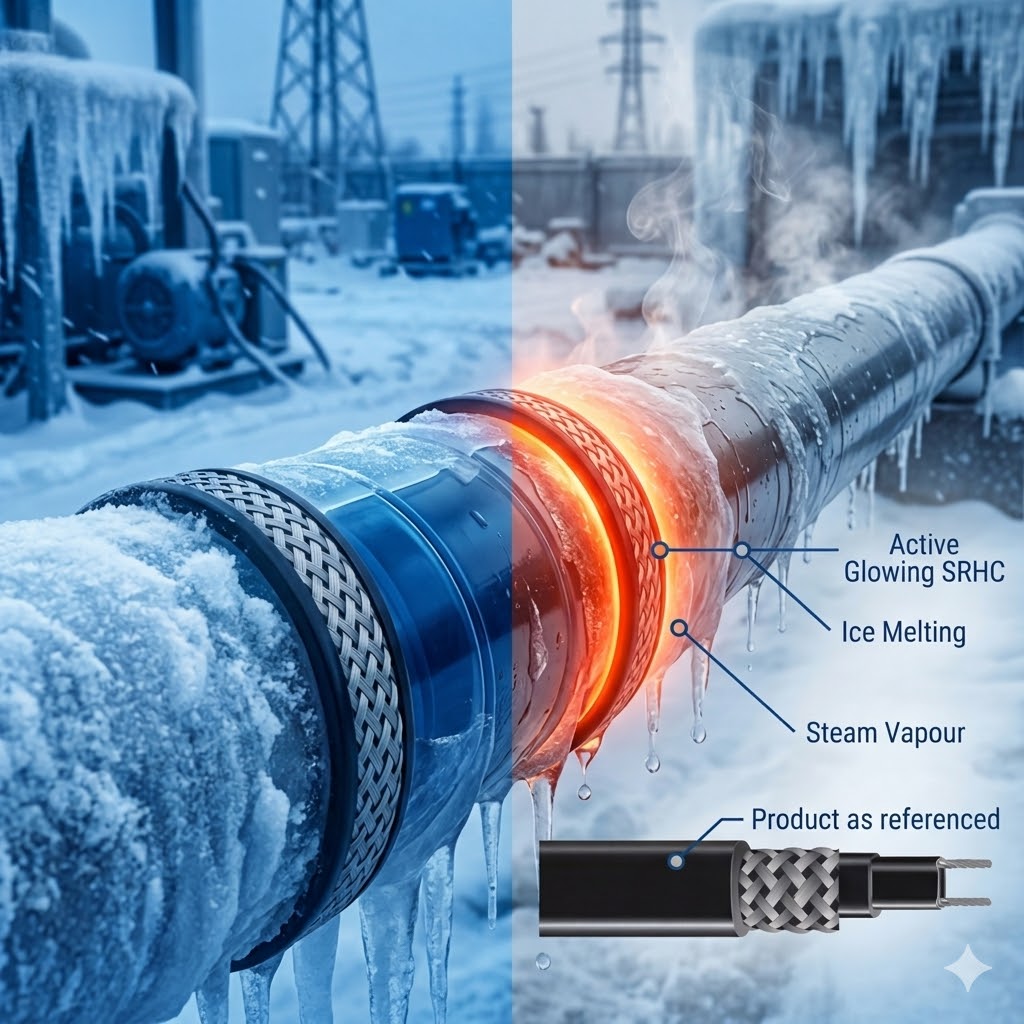
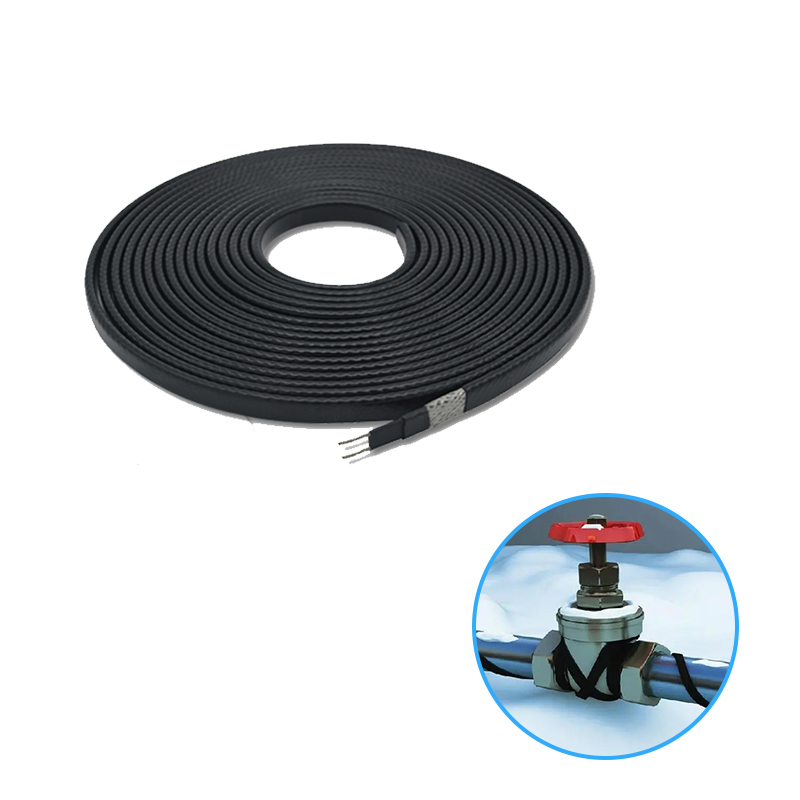
Unstandard installation is the main cause of short service life, overheating failure and safety hidden dangers of heat trace cable and Trace heating cable systems. Many on-site construction personnel lack professional standard awareness, resulting in frequent system failures after winter operation. This article summarizes 10 most common installation mistakes and targeted standard solutions to help builders complete standardized construction of pipe heating cable, gutter heating cable and snow melting cable.
Mistake 1: Random cutting of constant wattage heating cable
Many workers cut constant wattage electric heating cable at will according to on-site length, resulting in unbalanced power output and local overheating. Solution: Only self-regulating heat trace cable supports on-site cutting; constant wattage cables must be customized with fixed length in advance by the manufacturer.
Mistake 2: Cable overlapping and crossing installation
Overlapping pipe heating cable andtrace heating cable will cause local heat accumulation, burn the outer jacket and even burn the cable core. Solution: Keep cables laid flat and straight without overlapping, crossing and stacking, and fix them with standard aluminum tape at equal intervals.
Mistake 3: Using indoor cables for outdoor scenarios
Ordinary indoor heating cables have no UV resistance and low-temperature aging resistance. Outdoor use will cause rapid cracking and failure. Solution: Outdoor roof and pavement scenarios must use dedicated gutter heating cable and snow melting cable with outdoor anti-UV and weather-resistant certification.
Mistake 4: Missing thermal insulation layer after cable laying
Many projects save costs by omitting thermal insulation materials, resulting in serious heat loss and extremely high power consumption. Solution: Wrap professional thermal insulation cotton and waterproof protective layer outside all pipeline heating systems to improve energy efficiency.
Mistake 5: No temperature controller matching
Direct power-on operation without thermostat leads to long-term full-load operation of the cable, accelerating aging and wasting electricity. Solution: All heating cable systems must be equipped with matched intelligent thermostats and sensors to realize automatic start and stop.
Mistake 6: Unstandard wiring and loose joints
Non-standard wiring and loose terminal joints cause poor contact, heat generation at joints and even electric leakage. Solution: Follow professional wiring specifications, use matched junction boxes, and ensure firm and sealed wiring joints.
Mistake 7:
Excessive cable spacing for snow melting system
Excessively large spacing of snow melting cable leads to uneven pavement heating and incomplete snow melting. Solution: Strictly control the cable spacing at 10-20cm according to design standards to ensure full coverage of heating area.
Mistake 8: Random extrusion and damage during construction
Construction personnel step on cables or use sharp tools to touch cables, causing hidden damage to the cable insulation layer. Solution: Protect the laid cables during construction, prohibit trampling and impact, and conduct full insulation test before delivery.
Mistake 9: Improper fixation of gutter heating cable
Simple binding fixation causes the
gutter heating cable to slip and fall off under snow pressure. Solution: Use special anti-slip fixing clips for roof installation to ensure firm fixation for long-term outdoor use.
Mistake 10:
Mixed use of different types of heating cables
Mixing low-power pipeline cables and high-power snow melting cables leads to unadapted system power. Solution: Strictly use matching cable products according to project scenarios, and do not mix different types of heat trace cable products.
Standard delivery inspection process
After installation, complete appearance inspection, circuit resistance test, insulation performance test and power-on test in sequence. Only after all indicators are qualified can the system be delivered for use.
FAQ
Q1: Can overlapping cables be used after adjustment?
A: If the outer jacket is not damaged after adjusting the position, it can be used normally; damaged cables need to be replaced.
Q2: Is it necessary to install a thermostat for self-regulating cables?
A: It is recommended to install it, which can greatly save power and prolong cable service life.
We provide full-standard
heat trace cable, trace heating cable,pipe heating cable, gutter heating cable and snow melting cable, and support professional installation guidance for global projects.