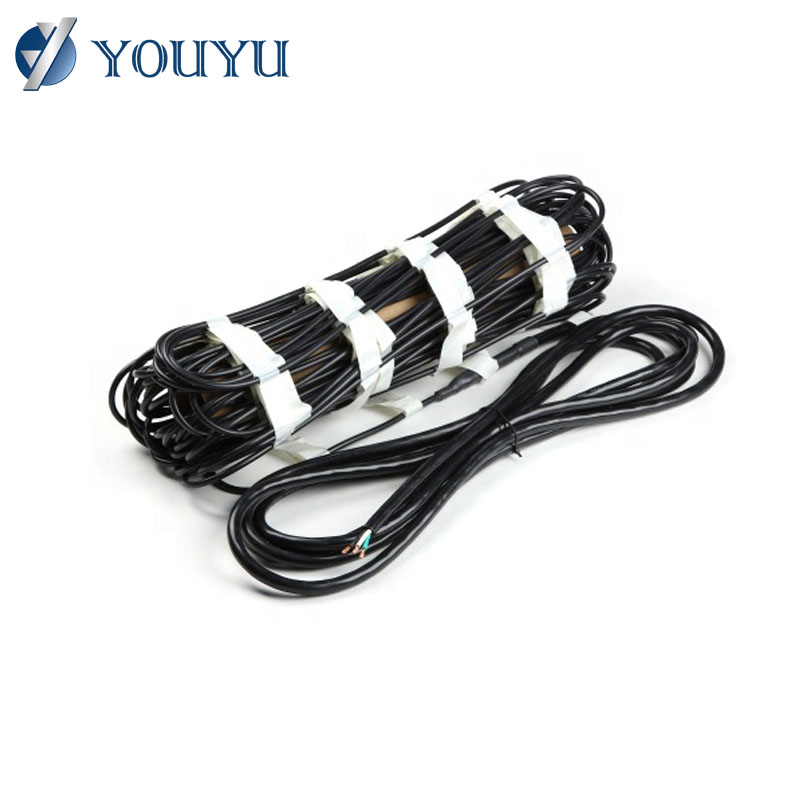
As for tank heating, it’s not exactly difficult, but it’s not exactly simple either.
Over the years, my deepest realization is this: A truly excellent heating solution isn't about simply maximizing power or pursuing flashy technology—it’s about getting the temperature just right.
How we're used to doing it
When dealing with media that have high viscosity and are sensitive to temperature fluctuations, we tend to prefer
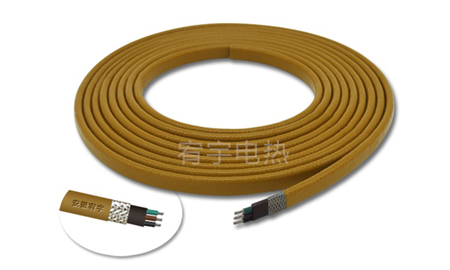
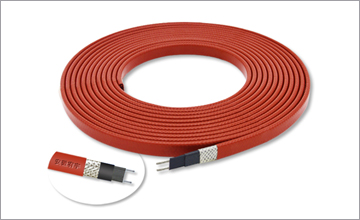
self-regulating heating cables. The advantage of these cables is that they can automatically adjust their heat output in response to changes in ambient temperature—providing more heat when it’s cooler and reducing the output once the desired temperature is reached. Once installed, they generally require little or no repeated fine-tuning, and they’re less likely to experience localized overheating or excessive energy consumption. Many field engineers have commented, “Once they’re installed, you just forget about them”—a feedback we’re delighted to hear.
For long-distance pipelines between storage tanks—or for large spherical tanks that require highly uniform temperatures—we recommend a constant-power
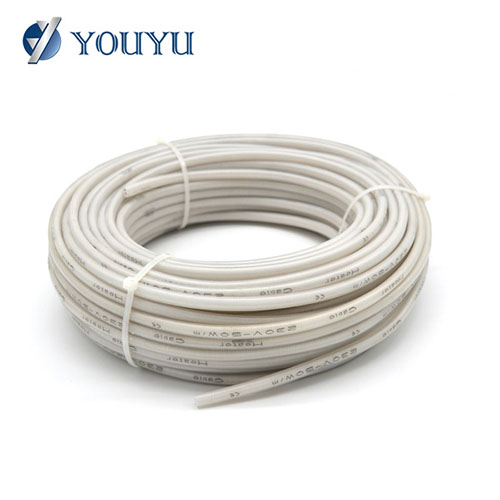
electric heating solution. This system delivers steady heat output, ensuring minimal temperature differences along pipelines spanning dozens or even hundreds of meters. As a result, the medium flows smoothly from the storage tank all the way to the next processing stage, without disrupting production.
The places that really take effort are often the details.
In irregularly shaped areas such as tank valves, pump bodies, and elbows, heat-tracing dead zones tend to form easily. We spent a great deal of time studying the heat dissipation characteristics of different sections, then carefully selected
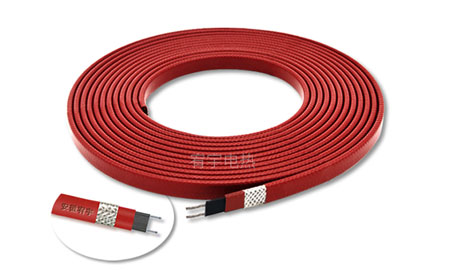
self-regulating heating tapes tailored specifically for each area. We also paired these tapes with insulation layers of appropriate thickness and moisture-proof barriers. As a result, heat loss has been significantly reduced, and the system has become more stable.
These practices have been repeatedly validated in several projects undertaken by Sinopec and CNPC, and have also obtained the necessary explosion-proof certifications. However, we believe that even more important than having these certificates is this: After each project is delivered, customers won’t need to frequently visit the site or deal with emergencies in the middle of the night.
Finally, I’d like to say
For tank heating, the simpler it is, the better—not necessarily the more complex. The key is reliability and peace of mind.
A good system won’t remind you of its existence every single day; it’ll always be stable and reliable when it matters most.