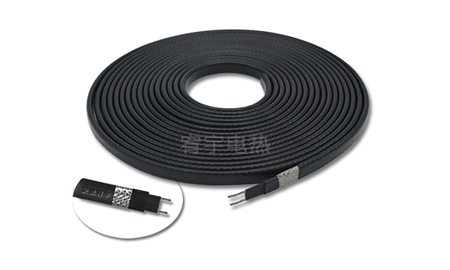
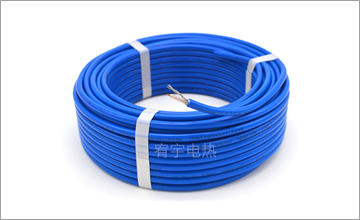
Slip-and-fall accidents caused by snow and ice on pavement bring huge safety risks and legal liabilities for commercial properties, factories, schools and residential villas. Manual snow shoveling and salt deicing consume continuous labor costs, damage concrete pavement and cause environmental pollution.
snow melting cable, buried under pavement, provides automatic, efficient and maintenance-free ice and snow removal solutions for all cold-climate scenarios.
What is snow melting cable?
snow melting cable is heavy-duty outdoor
electric heating cable, belonging to the
Trace heating cable and heat trace cable product family. It is professionally designed for burial in concrete or asphalt layers of driveways, pedestrian sidewalks, steps and loading ramps. With high power density, it generates stable heat to melt snow and ice completely, ensuring safe and smooth pavement in winter. It is completely different from low-power pipe heating cable and gutter heating cable used for light freeze protection.
Main application scenarios of snow melting cable
- Residential villa driveways and front entrance steps
- Commercial building entrances and pedestrian sidewalks
- Factory loading platforms and warehouse access ramps
- School, hospital and public facility walkways
Professional design calculation rules for
snow melting cable
The required power density of snow melting cable depends on local climate conditions:
- Mild snowfall areas: 200~300 W per square meter
- Heavy snow and extreme cold areas: 300~400 W per square meter
Standard design steps:
1. Accurately measure the total pavement area requiring snow melting treatment
2. Confirm local minimum winter temperature and average annual snowfall
3. Set reasonable cable spacing (10cm~20cm standard) for uniform heating
4. Match intelligent thermostat and snow sensor for automatic operation
5. Reserve concrete expansion gaps to prevent pavement cracking
Critical installation notes for snow melting cable
Fix snow melting cable firmly on reinforcement mesh before concrete pouring. Strictly avoid stepping on or puncturing cables during construction. Complete cable continuity and resistance tests before and after concrete pouring to ensure no damage. Never use sharp tools to dig pavement near the heating system in daily maintenance.
Product category comparison
1. s
now melting cable: High-power buried pavement deicing system for outdoor heavy snow scenarios
2. gutter heating cable: Surface-mounted roof deicing cable with UV resistance
3. pipe heating cable: Pipeline anti-freezing cable for indoor and outdoor pipe protection
4. electric heating mats for floors: Low-power indoor comfort heating mats customized by professional Floor heating manufacturer
Common installation mistakes to avoid
Never use indoor-grade electric heating cable for outdoor pavement snow melting. Uneven cable spacing leads to incomplete snow melting. Running systems without sensors causes serious energy waste. Skipping pre-construction cable testing results in high rework costs.
FAQ
Q1: Can snow melting cable be used under asphalt pavement?
A: Special asphalt-grade snow melting cable is available; ordinary concrete-type cables cannot withstand high asphalt pouring temperatures.
Q2: Does snow melting cable require daily maintenance?
A: Minimal maintenance is needed, only annual circuit and sensor inspection before winter.
Q3: Can snow melting cable replace gutter heating cable?
A: No, their power parameters, installation methods and application scenarios are completely different and cannot be substituted.
Our factory manufactures certified heavy-duty snow melting cable, heat trace cable, Trace heating cable, pipe heating cable, gutter heating cable and electric heating mats for floors. As a professional Floor heating manufacturer, we provide free layout drawing services for large snow melting projects.