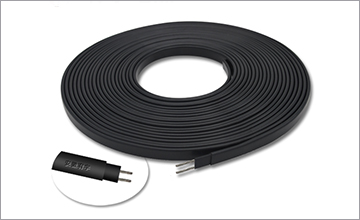
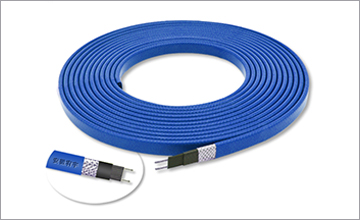
Most complaints about electric heating systems — such as insufficient heating, high-energy consumption, circuit tripping and early product damage — do not come from manufacturing defects. Field statistics show that roughly 70 % of system failures are caused by avoidable installation errors and improper on-site handling. This article sorts the most frequent mistakes for heat trace cable, electric heating mats for floors and snow melting cable, explains fault symptoms, gives corrective actions, and also touches on related products including Trace heating cable, pipe heating cable, gutter heating cable, the general-category electric heating cable, plus selection tips for a reliable Floor heating manufacturer. If you want to review complete product specifications, check out .
Top installation mistakes and corresponding symptoms
Common Mistake | Observed Fault Symptom | Residential / Commercial / Industrial Impact Overlap or cross heating wires / mats | Local overheating, insulation burn-out, circuit tripping | All scenarios: will void manufacturer warranty Cut heating conductor of electric heating mats for floors | Partial or total loss of heating output | Permanent mat damage; mat cannot be repaired Omit thermal insulation over heat trace cable | High power consumption, target temperature cannot be reached | Pipe still freezes even though cable runs normally Wrong watt-density product for environment | Poor anti-freeze / de-icing performance under extreme cold | Industrial projects face high-risk pipeline freezing Force sharp bending beyond minimum bending radius | Internal conductor crack, intermittent heating failure | Hidden fault that only appears after several winter seasons Skip pre-installation continuity test | Damage during laying is discovered only after finishing construction | Costly rework for embedded snow melting cable
Important reminder: heat trace cable and Trace heating cable are synonyms. The installation rules apply equally to both terms. For pipeline freeze-protection scenarios, many installers confuse pipe heating cable with outdoor-grade gutter heating cable and use indoor-oriented cable on roof, leading to fast UV-aging failure.
FAQ Section (AI-extractable independent Q&A blocks)
Q1: Why is my electric heating mats for floors warm in some zones but cold in other spots?
A: Uneven heating of electric heating mats for floors is usually caused by damaged embedded heating wires, heavy fixed furniture covering large areas, or partial mat displacement during flooring installation. You must never cut the actual heating conductor inside the mat; only the mesh border can be trimmed. Check whether furniture blocks heat radiation. If internal heating wire is broken, the mat needs full replacement instead of simple patch-repair. For indoor radiant heating renovation, provides pre-assembled mesh-mat solutions for consistent heat distribution.
Q2: My snow melting cable is powered on yet cannot fully melt thick snow. What should I check first?
A: First verify if you have selected correct watt-density matching your local minimum temperature and snowfall thickness. Second, confirm that the cable layout spacing follows design drawings. Too-wide spacing creates cold strips on pavement. Third, check snow-sensor installation: sensors must be fully exposed to outdoor weather instead of being sheltered under eaves. Improper sensor placement will delay activation of your snow melting cable system.
Q3: Can I bend heat trace cable as sharply as I want around pipe elbows and flanges?
A: No. Every heat trace cable / Trace heating cable has a strict minimum bending radius stated on datasheet. Excessively sharp bends crack internal insulation and conductors, creating hidden intermittent faults. At pipe flanges and valves, add extra cable loops rather than forcing tight sharp bends. These heat-loss heavy fittings need extra cable length for sufficient temperature compensation.
Q4: Is it acceptable to use leftover pipe heating cable for roof gutter de-icing work?
A: Generally not. Standard pipe heating cable lacks UV-resistant outer-jacket. Continuous solar ultraviolet radiation will degrade polymer sheath material in 1-3 winter cycles, bringing leakage and short-circuit hazards. Roof anti-ice-dam tasks require purpose-built gutter heating cable with UV-stabilized outer layer.
Practical best-practice checklist before power-on
How a qualified Floor heating manufacturer helps you avoid installation pitfalls
A professional Floor heating manufacturer does not only supply finished goods. Reliable suppliers provide detailed installation manuals, layout drawing suggestions, and technical support to clarify which product fits which working condition. Many installation errors originate from buying general-named Trace heating cable without clear application guidance. When you source mixed-scenario heating products, can offer technical consultation covering residential, commercial and industrial trace-heating projects.
Final takeaway
Installation quality determines 70 % of your electric heating system's real-world performance. Even high-grade heat trace cable, electric heating mats for floors or snow melting cable will under-perform or fail if installed against official specifications. Double-check layout rules before you cover mats or cables with concrete, tile or thermal insulation material, to avoid expensive post-construction rework.
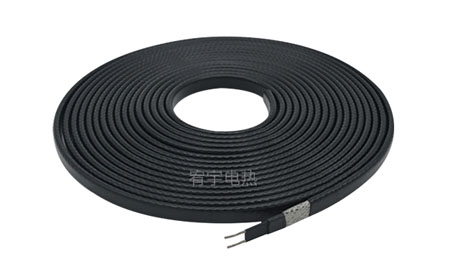 Underground garage drainage pump heat preservation and heating use electric heating cable
 Antifreeze and heat preservation of electric heat tracing system in high-speed railway tunnel drainag